
Keep the doors closed. A full freezer holds a safe temperature for about 48 hours, while a half-full freezer lasts about 24 hours. These are food-safety limits—not estimates of how long the appliance itself remains cool.
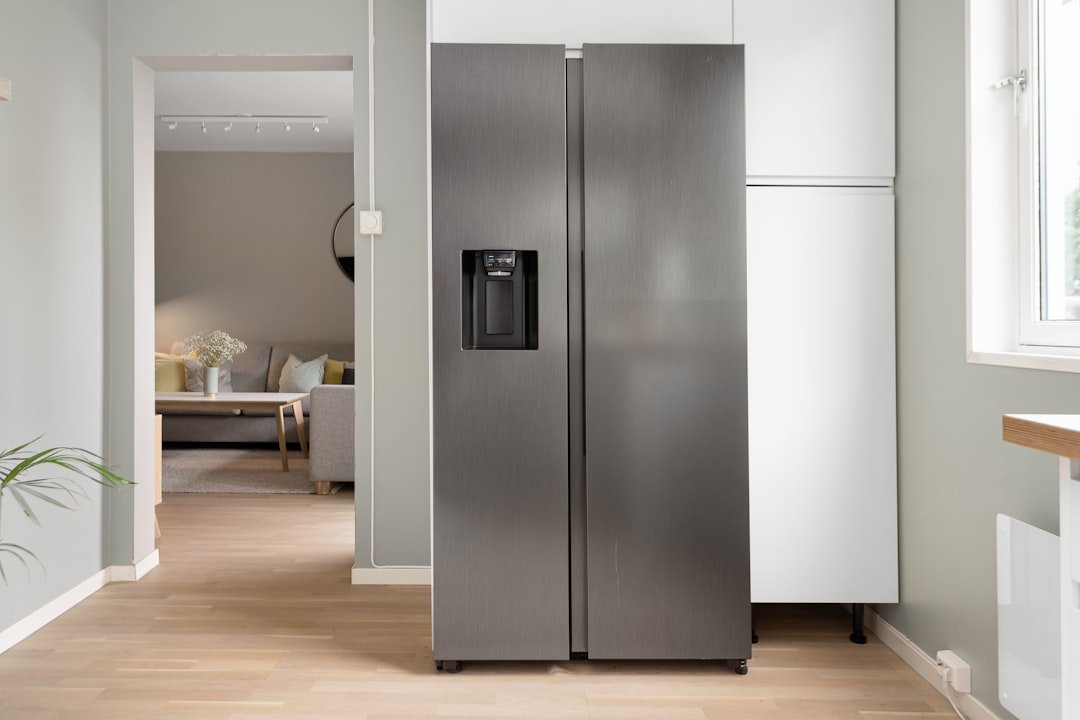
The refrigerator power-outage timeline
The clock starts when electrical power stops—not when the food begins to feel warm. The safest way to judge the situation is with an appliance thermometer. A refrigerator should remain at or below 40°F (4°C), while a freezer should be at 0°F (-18°C) or below.
| Time without power | What to do | Main risk |
|---|---|---|
| 0–2 hours | Keep both doors closed. Note the outage start time. Prepare coolers, ice or frozen gel packs if the outage may continue. | Frequent door opening releases cold air and shortens the safe window. |
| 2–4 hours | Continue keeping doors closed. If power will not return soon, move priority perishables to a cooler that can hold 40°F or below. | The refrigerator is approaching the official four-hour guidance. |
| More than 4 hours | Discard refrigerated perishables unless you know they stayed at 40°F or below. Check official food-by-food guidance. | Food can become unsafe even when it looks and smells normal. |
The four-hour limit comes from current guidance by the U.S. Food and Drug Administration and the USDA Food Safety and Inspection Service. For individual foods, use the official FoodSafety.gov power-outage chart.
What food should you discard after four hours?
Discard perishable refrigerated foods such as raw or cooked meat, poultry, fish, eggs, milk and leftovers when the refrigerator has been without power for more than four hours and you cannot confirm they remained at 40°F or below. Do not rely on smell, appearance or a small taste.
Some foods are less risky than others, so avoid making one blanket decision for everything in the refrigerator. Condiments, hard cheeses, whole uncut produce and other items have different guidance. Check each item against the official FoodSafety.gov chart instead of guessing.
How to make the safe window last longer
- Keep the doors shut. Group decisions together instead of checking the refrigerator every few minutes.
- Use an appliance thermometer. Place one inside both the refrigerator and freezer before an outage happens.
- Prepare ice early. If the outage may exceed four hours, transfer perishables to an insulated cooler with ice or frozen gel packs.
- Group frozen items. A fuller freezer holds temperature longer because the frozen mass helps retain cold.
- Record the start time. Do not depend on memory during a long outage.
Can a power station keep the refrigerator safe?
Yes, a correctly sized power station can extend cooling, but restoring power briefly does not automatically reset the food-safety clock. What matters is whether the food remains at or below 40°F.
Refrigerators cycle on and off, and the compressor can draw much more power at startup than while running. That means a useful backup estimate must consider battery watt-hours, inverter losses, compressor duty cycle and startup surge—not simply divide battery capacity by the wattage printed on the label.
Use the Refrigerator Backup Calculator for an appliance-specific estimate. If you do not know your inputs, start with How Many Watts Does a Refrigerator Use? and compare common loads in the Appliance Wattage Library.
Estimate refrigerator backup time
Enter your battery capacity, refrigerator power and efficiency assumptions to estimate runtime—then use a thermometer to confirm actual food temperature during the outage.
Frozen food after a power outage
A full, unopened freezer generally keeps a safe temperature for about 48 hours; a half-full freezer for about 24 hours. Frozen food may be safely refrozen or cooked if it still contains ice crystals or measures 40°F or below. When you cannot verify the temperature or timing, follow the official discard guidance.
Frequently asked questions
Is food safe after a 5-hour power outage?
Perishable refrigerated food is not automatically safe after five hours. If you cannot verify that it stayed at or below 40°F, official guidance says to discard it. Check each food on the FoodSafety.gov chart.
How long will a refrigerator stay cold without opening the door?
About four hours for food-safety planning. Room temperature, refrigerator condition and how full it is can change the actual temperature, so use a thermometer rather than stretching the guideline.
Does turning the refrigerator on for an hour reset the four-hour rule?
Not by itself. Safety depends on the food’s measured temperature and how long it spent above 40°F. Brief power may not cool the center of every item quickly enough.
Can I run a refrigerator from a portable power station?
Often yes, if the inverter can handle the compressor’s startup surge and the battery stores enough usable energy. Estimate it with the refrigerator calculator and verify the setup before an emergency.
Bottom line
Plan around four hours for an unopened refrigerator, 48 hours for a full freezer and 24 hours for a half-full freezer. Keep doors closed, use a thermometer and move perishables to a cooler before the refrigerator’s safe window ends. Backup power is valuable, but temperature—not battery marketing—is the final safety check.
Reviewed sources: U.S. FDA, USDA FSIS and FoodSafety.gov. Guidance may be updated; follow local public-health instructions during a disaster.
Pingback: How Many Watts Does a Refrigerator Use? Complete Guide