
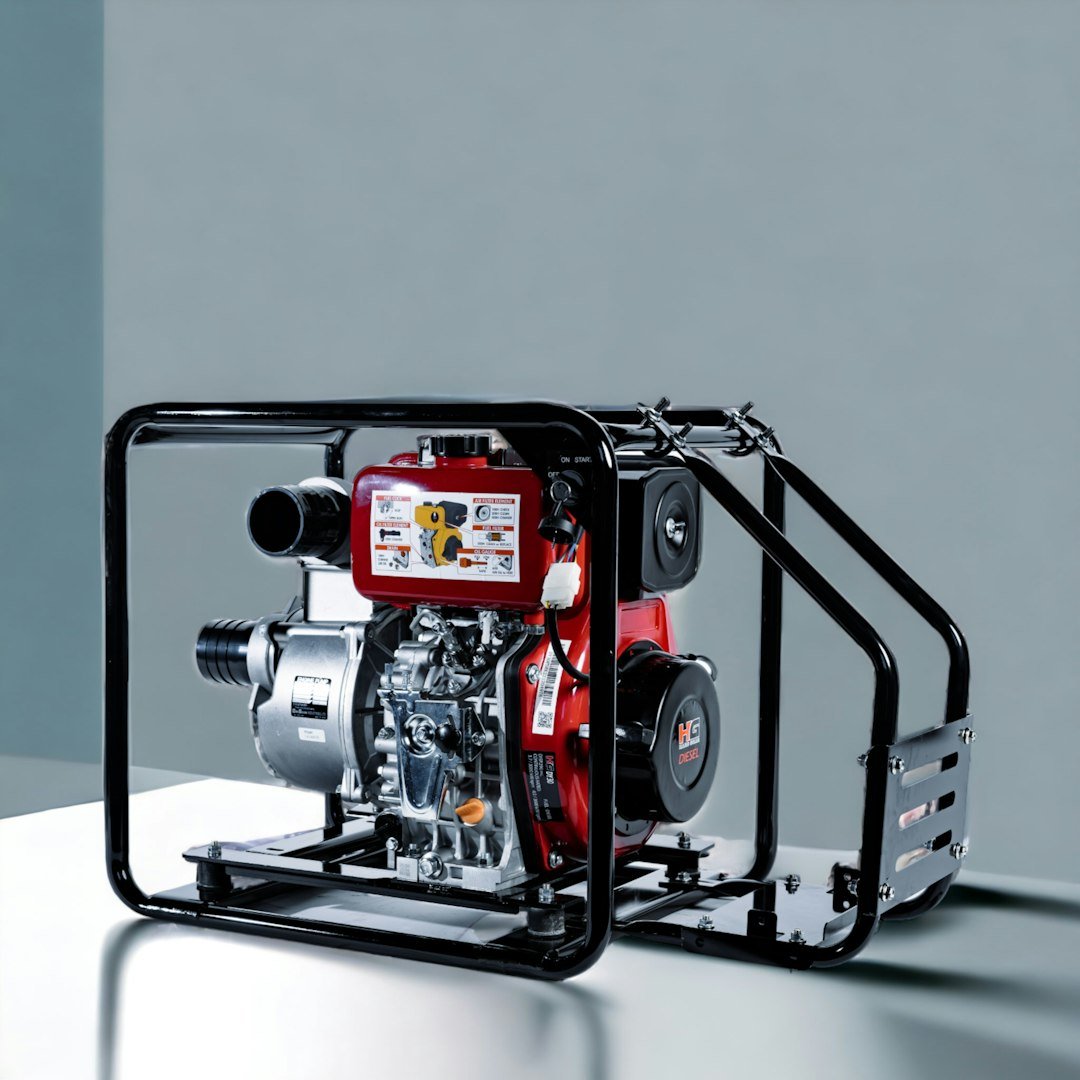
How much fuel a generator uses depends on its engine, fuel, electrical load and operating conditions. There is no honest universal gallons-per-hour number. The most reliable estimate starts with a fuel-rate or runtime figure published for your exact generator at a stated load.
Find the manual’s tank size, runtime and test load. Divide fuel quantity by runtime to get fuel per hour at that load, then use the Generator Fuel Runtime Calculator to adjust for your connected watts and reserve.
Generator fuel consumption is load-dependent
A generator consumes fuel to keep its engine running even when little electrical power is being used. As appliances add load, the engine must supply more mechanical power and fuel consumption rises. Because of that baseline engine demand, half electrical load does not automatically mean half the full-load fuel rate.
Inverter generators can reduce engine speed under lighter loads when their design permits it. Conventional generators generally hold a more consistent engine speed. The actual benefit still depends on the specific model, so use published or measured data instead of assuming one technology always saves a fixed percentage.
How to calculate fuel use from a manual’s runtime claim
If a specification says a generator runs for 12 hours on a 4-gallon tank at 50% load, the reference fuel rate is:
That figure is useful only when its test condition travels with it. Writing “0.333 gal/h” without “at 50% load” removes the information needed to estimate a different load.
Reference-rate formula
Runtime formula at the same load
Worked gasoline-generator example
| Input | Value |
|---|---|
| Generator running rating | 3,500 W |
| Connected load | 1,750 W (50%) |
| Fuel in tank | 3.5 US gal |
| Fuel reserve | 10% |
| Known consumption | 0.35 gal/h at 50% load |
| Usable fuel | 3.15 gal |
| Estimated runtime | 9.0 hours |
The reference load and target load match, so no curve adjustment is needed. Real operation can still differ due to altitude, temperature, maintenance, fuel quality and loads that cycle on and off.
Estimating consumption at a different load
To move away from the manual’s test load, PowerRuntime uses an editable curve with a no-load fuel fraction:
This is a planning model, not an engine test. The base fraction represents fuel used simply to keep the generator operating. The calculator defaults to 25%, but you can change it when the manual or measured data supports another assumption.
Gasoline, diesel and propane: keep the units consistent
The calculation works with any fuel as long as quantity and hourly rate use the same unit.
| Fuel | Common quantity units | Enter the rate as |
|---|---|---|
| Gasoline | US gallons or liters | gal/h or L/h |
| Diesel | US gallons or liters | gal/h or L/h |
| Propane | Pounds, gallons or liters | lb/h, gal/h or L/h matching the quantity |
Do not mix propane pounds with gallons unless you deliberately convert them under the relevant storage conditions. The calculator avoids hidden conversions: choose one unit and keep both inputs in that unit.
How much fuel does a generator use per day?
Once you know the adjusted hourly rate, multiply it by operating hours:
For example, 0.35 gal/h for nine hours uses 3.15 gallons. A full 24-hour estimate at that same rate would be 8.4 gallons, but assuming an unchanged load for an entire day may be unrealistic. Refrigerators, pumps, tools and air conditioners cycle or change demand.
Why a larger generator can waste fuel on a small load
Every running engine has overhead. If a large generator supports only a very small load, a greater share of its fuel can go toward keeping the engine and alternator operating rather than supplying useful electrical energy. That does not mean the smallest generator is automatically correct: it still needs sufficient continuous and surge capacity.
List the equipment you intend to run using the appliance wattage library. Add continuous watts separately from the largest combination of starting loads, then compare both numbers with the generator ratings.
Running watts versus surge watts
- Running watts are the sustained electrical output available during normal operation.
- Surge watts are short-duration capacity used when motors and compressors start.
A 1,700 W refrigerator-starting event may occur on top of other connected loads. The system must remain below the generator’s surge limit at that moment. Fuel runtime is meaningless if the generator trips or stalls during startup.
Five mistakes that make generator-runtime estimates wrong
- Using full tank size without a reserve. Keep a margin for measurement error and changing conditions.
- Ignoring the load attached to the runtime claim. “Twelve hours per tank” is incomplete without the test load.
- Treating fuel use as perfectly proportional to watts. Engines consume fuel even at very low output.
- Mixing fuel units. Gallons, liters and propane pounds are not interchangeable inputs.
- Ignoring cycling and startup loads. Real household demand is rarely constant.
How to measure your real fuel consumption
- Start with a maintained generator on level ground in a safe outdoor location.
- Use a known fuel quantity and record the starting time.
- Connect a representative, monitored electrical load.
- Record average watts or kilowatt-hours delivered during the test.
- Stop before the tank is completely dry and measure remaining fuel.
- Divide fuel consumed by elapsed hours.
- Repeat at another load if you need a better curve.
Never refuel a hot or running generator. Follow the manufacturer’s shutdown, cooldown and refueling instructions.
Generator carbon-monoxide safety is not optional
Never use a generator inside a home, garage, basement, shed or other enclosed area—even with doors or windows open. Carbon monoxide is colorless and odorless and can cause sudden illness or death.
Generator fuel-consumption FAQ
How many gallons of gas does a generator use per hour?
There is no reliable universal figure. Divide the fuel quantity in a model-specific runtime test by the stated hours, and keep the test-load percentage attached to the result.
Does a generator use less fuel with less load?
Usually yes, but not in direct proportion to electrical watts because the engine has baseline consumption. The amount depends on generator design and operating conditions.
How much fuel does a 5 kW generator use?
The 5 kW rating alone is insufficient. You also need the fuel type, actual connected load and a reference consumption or runtime figure for that exact generator.
How long will a propane tank run a generator?
Divide usable propane quantity by the generator’s propane-consumption rate at the expected load. Keep pounds with lb/h or gallons with gal/h.
How do I compare fuel cost?
Calculate fuel used for the planned runtime, then multiply by your current local price per matching fuel unit. Include maintenance and storage considerations separately.
For battery-based backup instead, compare the same load with the power station runtime calculator.